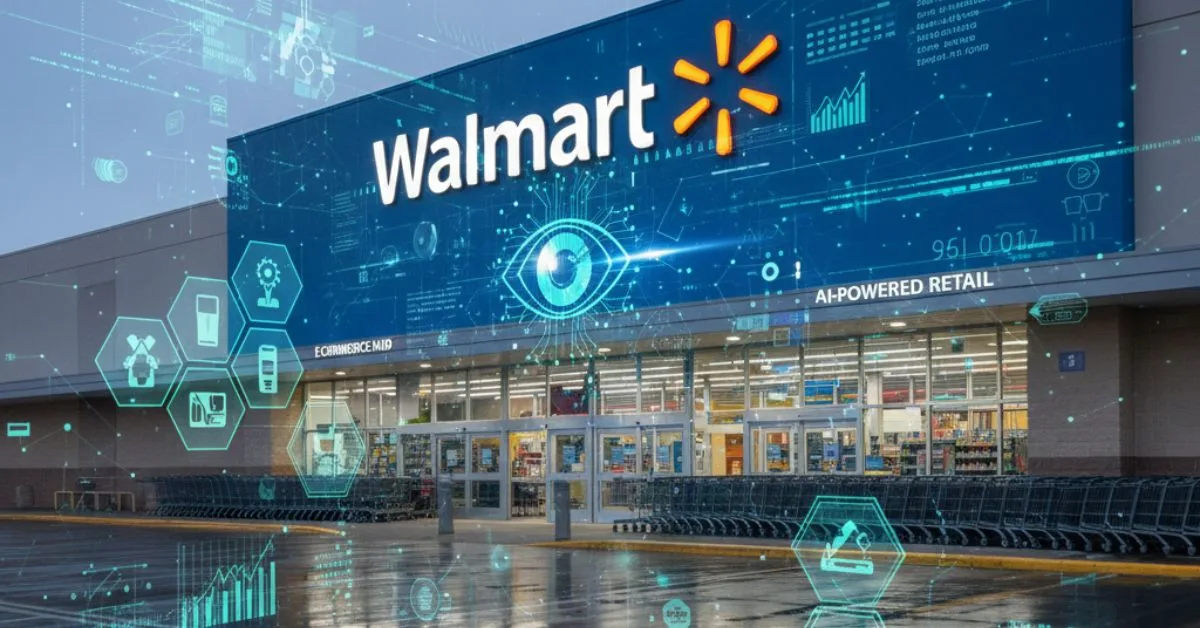
Walmart Inc. (WMT) has delivered a strong Q3 performance, raised its full-year outlook, and announced a major strategic move: it will shift its stock listing from the New York Stock Exchange (NYSE) to the Nasdaq, effective December 9, 2025. This action underscores Walmart’s push toward being more tech-forward, while its financials reflect resilient growth across e-commerce, advertising, and store sales. Nasdaq+2Yahoo Finance+2
Walmart’s Latest Financial Performance
Q3 FY26 Earnings Highlights
- Revenue: $179.5 billion (+5.8% YoY) FinancialContent+2Yahoo Finance+2
- Adjusted EPS: $0.62, beating analysts’ estimates of $0.60 FinancialContent+1
- Operating Income: Increased to $7.263 billion (adjusted) Nasdaq+1
- Full-Year Guidance Raised: Adjusted EPS forecast now $2.58–$2.63, up from $2.52–$2.62 Nasdaq
Previous Quarter Trends: Q1 & Q2 FY26
- Q1 FY26: Revenue up 2.5% (4.0% in constant currency), e-commerce up 22%, adjusted EPS $0.61. Walmart News & Leadership
- Q2 FY26: Revenue rose 4.8% (5.6% cc); global e-commerce grew 25%; operating income flat (adjusted), amid $450 million in liability-claim costs. Walmart News & Leadership
- Walmart reaffirmed its FY26 guidance amid these results. Walmart News & Leadership+1
Business Drivers: What’s Powering Walmart’s Growth
1. E-commerce Momentum
Walmart’s e-commerce business continues to be a major growth engine:
- In Q1 FY26, global e-commerce sales grew by 22%. Walmart News & Leadership
- In Q2 FY26, Shopify-style marketplace and store-fulfilled pickup/delivery boosted growth, contributing significantly to the 25% e-commerce rise. Walmart News & Leadership
- In Q3, this segment remains strong, supporting Walmart’s higher revenue and profitability.
2. Advertising Strength – Walmart Connect
- Walmart’s advertising arm, Walmart Connect, is scaling rapidly: in Q1, its growth contributed meaningfully to Walmart’s diversified income. Walmart News & Leadership
- Higher-margin digital advertising helps offset the thin margins typical in retail.
3. Omnichannel & Retail Resilience
- Walmart’s U.S. same-store (comparable) sales rose 4.5% (excluding fuel), beating expectations. Yahoo Finance
- Its physical stores, combined with its digital reach, continue to offer customers value and convenience — reinforcing Walmart’s legacy strength.
4. Financial Discipline
- In Q4 FY25: Operating income rose 8.3% (or 9.4% on a constant-currency basis). Walmart News & Leadership
- Return on assets (ROA) was at 7.9% and return on investment (ROI) at 15.5% in Q4 FY25, according to Walmart’s investor release. Walmart News & Leadership
Strategic Development: Moving WMT Listing to Nasdaq
One of the most notable developments is Walmart’s planned shift of its stock listing:
- Listing Move: From NYSE to Nasdaq, effective December 9, 2025. Financial Times+1
- Why the Shift: Walmart frames this move as aligning with its “technology-forward” strategy and innovation — Nasdaq is seen as more closely aligned with tech-driven companies. Financial Times
- Ticker: Walmart will retain its WMT ticker, so no change for investors in terms of symbol recognition. Investors
Strategic Partnerships & Innovation
OpenAI / ChatGPT Integration
- Walmart struck a partnership with OpenAI, enabling customers to make purchases through ChatGPT’s Instant Checkout. MarketWatch
- This move underscores Walmart’s ambition to transform shopping experiences with AI: from conversational commerce to more personalized, agentic interactions.
AI & Advertising
- Walmart is leveraging large-language models (LLMs) to improve its e-commerce ad platform. A recent paper describes how Walmart uses knowledge-distilled LLMs to enhance ad relevance and real-time performance on Walmart.com. arXiv
- This technology not only improves user experience but could also boost ad monetization.
Risks and Challenges Facing WMT Stock
While Walmart shows strength, several risks merit attention:
- Tariff Pressures
- Higher import tariffs could compress Walmart’s already tight retail margins. AP News
- Analysts point out that even modest cost pressures could erode Walmart’s margin buffer. markets.businessinsider.com
- Rising Claims Costs
- In Q2 FY26, Walmart took a $450 million hit from self-insured general liability claims, weighing on operating income. Nasdaq+1
- Such liabilities, if persistent, may limit profit flexibility.
- Competitive Pressure
- E-commerce competition is fierce (Amazon, other big-box and online players). Walmart’s shift into AI-enhanced shopping may help, but margins could be challenged.
- Cost of innovation (technology, automation) could strain short-term cash flow.
- Macroeconomic Uncertainty
- Consumer spending could slow if economic headwinds intensify (inflation, wage pressure).
- Walmart may face demand shifts, especially given its exposure to both low- and middle-income customer segments.
- Execution Risk
- Moving listing to Nasdaq is symbolic of a tech-first future, but execution depends on delivering on AI, ad growth, and omnichannel investments.
WMT Stock Outlook: Analysis & Investor Take
Bull Case
- Walmart’s beat-and-raise Q3 signals strong core business and strategic flexibility.
- E-commerce + Walmart Connect = diversified, higher-margin growth.
- Nasdaq listing could attract more tech-focused investors and signal Walmart’s evolution into a hybrid retail-tech company.
- AI integration (OpenAI partnership) may create new revenue streams and deeper customer engagement.
Bear Case
- Tariffs and liability costs pose real threats to operating margins.
- Heavy investment in tech and logistics may pressure free cash flow in the near term.
- Competitive risks in e-commerce remain high.
- If macro consumption slows, Walmart’s value proposition may be tested.
So, Is WMT a Buy Now?
- Long-term investors might view Walmart as a compelling core retail-plus-tech play, given its scale, cash flow, and evolving digital business.
- Short-term traders should watch how the market reacts to the Nasdaq transition and whether Walmart can sustain margin improvements.
- Risk-averse investors should closely monitor tariff developments, claims exposure, and consumer spending data.
Conclusion
Walmart’s WMT stock is navigating a pivotal moment. With its Q3 earnings beat, raised guidance, and confirmed move to Nasdaq, the company is signaling that it’s not just a retail giant — but a technology-forward, omnichannel powerhouse. Investors will be watching closely: can Walmart successfully monetize its digital transformation while managing costs and scaling its AI-driven initiatives? Its execution over the next few quarters could define whether WMT becomes a long-term growth anchor or faces margin pressure in a volatile retail landscape.
People Also Ask (FAQs)
- What is WMT stock?
WMT is the ticker symbol for Walmart Inc., a global retail company listed on the stock market. - Why is Walmart moving its stock to Nasdaq?
Walmart says the move to Nasdaq aligns with its “technology-forward” strategy, reflecting its growing focus on innovation. Financial Times - How did Walmart perform in Q3 FY26?
Revenue rose 5.8% year-over-year to $179.5 billion; adjusted EPS came in at $0.62. FinancialContent - Did Walmart raise its full-year 2026 guidance?
Yes — it raised its adjusted EPS outlook to $2.58–$2.63, up from a prior range of $2.52–$2.62. Nasdaq - How big is Walmart’s e-commerce business?
Very sizable — global e-commerce grew 22% in Q1 FY26 and 25% in Q2 FY26. Walmart News & Leadership+1 - What about Walmart’s advertising division?
Walmart Connect (its advertising business) is growing strongly, contributing higher-margin revenue. Walmart News & Leadership - Is Walmart’s profit margin at risk?
Yes, due to tariffs and rising self-insured claims costs. markets.businessinsider.com - What are Walmart’s risks?
Key risks include tariff exposure, liability cost increases, competition in e-commerce, and macroeconomic consumer slowdown. - Does Walmart pay a dividend?
Yes — Walmart pays a dividend, making it attractive for income-seeking investors (though the article doesn’t detail the current yield). - How is Walmart using AI?
Walmart is integrating AI into its shopping experience (e.g., a partnership with OpenAI) and improving ad relevance on Walmart.com using large language models. arXiv - What’s Walmart’s strategy for growth?
Its strategy includes expanding e-commerce, growing its ad business, increasing digital engagement, and improving its omnichannel infrastructure. - Will Nasdaq benefit Walmart?
Potentially — Nasdaq listing may attract tech-savvy investors and signal Walmart’s digital transformation to the market. - Is Walmart a defensive stock?
Yes — it’s often viewed as a consumer-defensive play because of its scale, broad customer base, and value-oriented offerings. - How did Walmart handle rising operating costs?
By focusing on higher-margin areas like ads and investing in efficiency, though some costs (like liability) have pressured profit. - How is Walmart’s global business doing?
Walmart International saw steady net sales growth in recent quarters, contributing to overall momentum. Walmart News & Leadership - What is Walmart’s free cash flow situation?
Walmart remains cash-flow positive, which gives it flexibility to invest in growth and innovation. - Is Walmart competing with Amazon?
Yes, particularly in e-commerce and digital retail. Walmart’s investments in AI and its marketplace aim to strengthen its competitive edge. - What’s Walmart’s long-term vision?
To be an omnichannel leader: combining large scale retail, fast e-commerce, and ad-driven profitability, while leveraging technology. - Should retail investors consider WMT now?
Potentially — for long-term exposure to retail + tech transformation. Short-term volatility may come from earnings surprises or macro risks. - How can I follow WMT’s future earnings?
You can follow Walmart’s earnings calls via their investor relations website, and track updates through financial news outlets and SEC filings.