1. Introduction: Why the Dow Jones Matters Now
The Dow Jones Industrial Average (DJIA) — one of the oldest and most-watched stock-market indices in the world — is now grabbing headlines for hitting record highs. In November 2025, the Dow crossed 48,000 points for the first time ever, driven by a powerful rotation in the market and improving political clarity. But beneath the surface, risks are bubbling: AI valuations, rate cut uncertainty, and geopolitics could shake investor confidence.
This article breaks down why the Dow is soaring, what’s pushing it, what could go wrong, and why regular investors should care.
2. What Is the Dow Jones Industrial Average (DJIA)?
- The Dow Jones is a price-weighted index made up of 30 large, publicly traded U.S. companies. Wikipedia
- Unlike a market-cap index, its calculation gives more weight to higher-priced stocks, not necessarily the biggest companies.
- It’s often used as a barometer of U.S. economic health, since many of its components are in industrial, financial, and consumer sectors.
3. The Big Rally: Why the Dow Is Hitting New Highs
3.1 Government Shutdown Relief
- The Dow’s recent surge is closely tied to optimism around the end of the U.S. government shutdown, which had dragged on for 43 days. New York Post+1
- With a spending bill approved in the Senate and expected to move in the House, investors breathed a sigh of relief. New York Post+1
- This resolution is key: it promises the return of delayed economic data, which will give market participants more clarity about inflation, labor markets, and growth. New York Post
3.2 Rotation Out of Big Tech / AI “Fatigue”
- Investors are increasingly pulling money out of high-flying tech and AI stocks — a shift that some are calling “AI fatigue.” Barron’s
- Instead of chasing ultra-growth, they are redirecting capital into defensive and value-heavy sectors: healthcare, financials, and industrials. Barron’s+1
- This rotation aligns well with the Dow’s makeup: many of its 30 companies are traditional blue-chip firms in industrial, financial, and consumer sectors. Wikipedia
3.3 Strong Earnings & Financials
- Financial sector companies — like Goldman Sachs, JPMorgan, and American Express — are leading the rally, with strong earnings and investor confidence driving their shares higher. New York Post
- Industrial and consumer firms are benefiting from favorable macro narratives: resilient U.S. demand, improving economic sentiment, and rotation into “safe” value plays.
4. Key Risks & Headwinds Building Up
4.1 AI Valuation Risks
- While the move away from Big Tech has helped the Dow, valuation concerns remain for AI-heavy companies. If valuations compress further, it could trigger broader corrections. Observer News Enterprise+1
- Big names like Nvidia have seen significant swings, which could affect sentiment across both growth and value stock investors. Yahoo Finance+1
4.2 Uncertainty Around Interest Rate Cuts
- The U.S. Federal Reserve’s future rate decisions are now a major pivot point. Some investors are dialing back expectations of an aggressive rate cut soon. Reddit
- If rate cuts don’t materialize as hoped, or are delayed, it could dampen enthusiasm for both growth and cyclical stocks.
4.3 Delayed Economic Data, Recession Fears
- The prolonged shutdown delayed many key economic releases, and now, as data comes back, markets may be more volatile. Reddit
- Fears of stagflation — where inflation stays high but growth slows — have resurfaced. Some analysts are warning that this could undermine the current market rally. MarketWatch
4.4 Trade / Tariff Risks
- Trade tensions and tariff concerns remain a wildcard. In previous periods, tariff announcements have sparked sharp Dow sell-offs. The Times of India+1
- Any escalation could threaten global supply chains and weigh on industrial and manufacturing sectors — core to the Dow.
5. Recent Performance & Market Dynamics
- On 12 November 2025, the Dow closed at a new all-time high of 48,254.82, gaining more than 300 points in a single session. New York Post
- In a recent session, the index jumped over 500 points (≈1.2%) as hopes over the shutdown ending grew strong. Yahoo Finance
- Futures markets also point to cautious optimism: markets opened November with strong buying in the Dow and S&P, even as concerns over the shutdown lingered. The Economic Times
- But on other days, weak labor data and tariff concerns have triggered steep sell-offs — showing how sensitive the Dow remains to macro shocks. The Times of India
6. What Is Driving the “Great Rotation”?
Investors are rebalancing their portfolios in a way that’s favoring the Dow’s sector mix:
- Value Over Growth: With Big Tech losing some luster, capital is flowing into more stable, dividend-paying companies.
- Interest-Rate Sensitivity: Financial firms may benefit from higher interest rates (or less aggressive cuts), making them more attractive.
- Economic Recovery Confidence: As the shutdown ends and data returns, investors are banking on a more stable economic environment.
- Macro Hedge: Industrials and consumer companies in the Dow may offer a hedge if rates stay elevated or growth slows.
7. Why the Dow Is “Winning” Right Now (Compared to S&P and Nasdaq)
- Less Tech Weight: Unlike the S&P 500 or Nasdaq, the Dow is not overly dependent on the biggest tech giants — making it more resilient when tech wobbles. The Economic Times
- Diverse Sectors: Its components include industrials, consumer goods, financials — sectors that often perform better when markets rotate out of high-flying tech.
- Defensive Nature: Some Dow stocks are considered more defensive (i.e., stable companies with reliable earnings), which is attractive in uncertain times.
- Macro Appeal: In periods where political risk (like shutdowns) or macro risk is high, blue-chip industrial and financial names may feel safer to investors.
8. What Analysts Are Saying — And Their Forecasts
- According to Barron’s, if the current rotation from AI-heavy tech to value sectors continues, the Dow could hit 50,000 by the end of 2025. Barron’s
- Key strategists believe that the Dow’s ascent is not just a “tech fatigue” trade — but the beginning of a structural re-shuffling in how money flows in the market.
- However, some analysts warn that if inflation re-accelerates or interest rates do not come down as expected, the rally could be fragile.
- Others note that while AI remains important, investors are being more selective — preferring firms with sustainable cash flow instead of just growth potential.
9. Potential Scenarios for the Near Future
Here are some possible paths for the Dow going forward, depending on how things unfold:
Scenario A: Bullish Continuation
- Continued rotation out of tech into value boosts the Dow further.
- Rate cuts by the Fed support earnings.
- Economic data confirms solid growth stability post-shutdown.
Outcome: Dow climbs toward 50,000 or higher.
Scenario B: Volatility Persists
- Inflation surprises or weaker-than-expected data keep rate cut fears alive.
- Trade tensions flare up again.
- Rotation reverses, with tech regaining favor.
Outcome: Sharp swings, possible pullbacks.
Scenario C: Correction
- Valuation concerns in AI or macro shock (e.g., geopolitical event) trigger a broader market sell-off.
- Defensive sectors struggle if earnings disappoint.
Outcome: Dow corrects significantly, prompting re-evaluation.
10. Why This Matters for Regular Investors & the Public
- For long-term investors: This could be a moment to consider value plays in blue-chip names (if the rotation sustains).
- For retirees / dividend investors: Many Dow companies pay dividends — this rally could be appealing for income-focused portfolios.
- For risk-aware traders: The rising volatility means risk management is critical — having a diversified approach may be safer than chasing growth.
- For public policy watchers: The end of the shutdown shows how political risks can seriously move markets — fiscal policy remains a major lever.
11. Conclusion: A Historic Moment With High Stakes
The Dow Jones Industrial Average is not just breaking records — it’s potentially entering a new phase. The combination of political stabilization (shutdown ending), sector rotation away from speculative tech, and strong performance in traditional industries explains why the index is rallying hard.
But it’s not risk-free. Macro concerns — inflation, rate cuts, trade — remain very real. If things go sideways, the Dow could face a harsh reckoning.
For now, though, the story looks bullish: not just a tech-driven growth boom, but a more balanced, mature rally that could define how markets close out 2025.
Why did the Dow Jones drop nearly 800 points recently?
The Dow dropped ~800 points due to rising doubts about a December Fed rate cut, as markets reacted to mixed economic signals and rate expectations. UPI+2Valley City Times-Record+2
What is driving current rate cut uncertainty for the Federal Reserve?
Investors are worried because Fed officials signaled fewer rate cuts in 2025 amid sticky inflation and strong labor data. Newsweek+2mint+2
How does inflation affect the Dow Jones?
Higher inflation raises the cost of borrowing and can reduce company profitability; this dampens investor sentiment and can lead to Dow declines. The Economic Times+1
What caused the biggest single-day drop for the Dow in 2025?
A mix of economic risk-off, AI valuation concerns, and disappointing inflation or rate-cut outlooks contributed to major single-day drops. mint+1
Are AI stocks hurting the Dow’s performance?
Yes, recent market correction in AI-related tech raises concerns, and while the Dow isn’t as tech-heavy, the broader risk-off sentiment affects it. Observer News Enterprise+1
Did the government shutdown impact the Dow?
Yes — the prolonged U.S. government shutdown delayed economic data and caused uncertainty, which weighed on markets including the Dow. Observer News Enterprise
What is the composition of the Dow Jones?
The DJIA is made of 30 large blue-chip U.S. companies across sectors like finance, industrials, consumer goods, and technology. Wikipedia
Why is the Dow Jones called “price-weighted”?
Because each company’s stock price (not market cap) impacts the index: higher-priced stocks affect the Dow more. Investopedia
What happened when the Fed cut rates but reduced future cut forecasts?
The Dow tumbled after the Fed signaled fewer rate cuts ahead, surprising markets and triggering a selloff. Newsweek+1
Can the Dow reach 50,000 soon?
It’s possible if the current rotation toward value stocks and optimism over rate cuts continues, but it’s not guaranteed due to risks like inflation.
How do rate cuts help stocks like those in the Dow?
Rate cuts reduce borrowing costs, boost business investment, and often fuel consumer spending — benefiting many Dow companies.
Why do markets sell off when rate cut chances fall?
Lower-than-expected rate cuts can disappoint investors who were relying on monetary easing to support growth, causing risk-off behavior.
Has the Dow broken historical records recently?
Yes, it recently hit a new high above 48,000 before pulling back due to macro risks. UPI+1
What are the biggest risks facing the Dow today?
Key risks include inflation surprises, slower rate cuts, AI overvaluation, and geopolitical instability.
How do labor market conditions affect the Dow?
A strong labor market can support economic growth (good for Dow companies), but if too tight, it fuels inflation, pressuring monetary policy.
What is “AI valuation risk” and why does it matter for the Dow?
AI valuation risk refers to possibly inflated prices for AI tech companies — when the bubble bursts, investor sentiment shifts, affecting all markets.
Can geopolitical events like a ceasefire impact the Dow?
Yes — geopolitical stability, like a ceasefire, can push investor confidence higher, especially in global or interest-rate sensitive markets. Reddit
Does trade tension affect the Dow?
Trade tensions can disrupt global supply chains and affect industrial components of the Dow, causing volatility.
Why did the Dow rebound after a rate cut?
The rebound came because some investors saw the cut as bullish in the near-term, even though longer-term rate expectations softened. mint
Is the Dow too sensitive to rate policy?
Yes, because many Dow companies rely on stable borrowing costs, so Fed policy shifts strongly influence investor psychology.
How do value stocks help the Dow during market rotations?
When investors rotate from growth to value, they often buy financials, industrials, and consumer staples — many of which are Dow components.
Why did the Dow see its worst drop in 2025 according to Business Today?
A surge in inflation outlook and weak economic indicators led to a sharp risk-off, causing a large drop in the Dow. Business Today
How does the Fed’s dot plot affect Dow traders?
The dot plot shows expected future rate paths — if the Fed signals fewer cuts, it can spook investors and lead to Dow volatility.
What role does the University of Michigan’s Sentiment Index play?
Consumer sentiment data influences expectations for consumer spending — a key driver for many Dow companies — affecting market direction. Business Today
Will the Dow recover if rate cuts resume?
Potentially yes — renewed rate-cut expectations could attract buyers back into value and cyclical names, supporting a rebound.
How significant is the Fed’s 43-day shutdown on the Dow’s risk?
The shutdown delayed critical economic data, increasing uncertainty — a factor that likely weighed on investor appetite for risk. Observer News Enterprise
What is “risk-off” investing and how does it affect the Dow?
Risk-off means investors move to safer assets; for the Dow, this could mean selling in favor of bonds or cash until clarity improves.
How are industrial stocks in the Dow affected by these macro shifts?
Industrial stocks could benefit from economic stabilization and rotation, but may suffer if rate-cut hopes decline or growth slows.
Why do rate cut expectations change so quickly?
Because new economic data, geopolitical events, or Fed commentary can rapidly shift market expectations.
Which Dow companies are most sensitive to rate changes?
Financials (like JPMorgan) and industrials are highly rate-sensitive — their profitability can be directly affected by interest rates.
What is a “rate cut volatility trade”?
It’s when investors trade based on expected Fed rate decisions, buying or selling equities like the Dow in response to cut probability swings.
How do bond yields relate to the Dow’s performance?
Rising yields can increase borrowing costs for companies and make bonds more attractive than stocks, pressuring the Dow.
Why did AI-focused tech stocks sell off recently?
Because of renewed scrutiny on valuations, profit sustainability, and concerns that rate cuts may not support hyper-growth.
Can the Dow crash because of AI risk alone?
Not likely alone — but AI-related risk, combined with macro policy shifts, could amplify a broader market correction.
What makes the Dow a “safe” index in times of volatility?
Its heavy weight in blue-chip, diversified, dividend-paying companies makes it a relatively stable anchor compared to more speculative indices.
How do investors hedge Dow exposure?
Many use options, ETFs (like DIA), or diversify into bonds or international equities when uncertainty is high.
What does “selling into strength” mean for Dow investors?
It means taking profits when the Dow rallies — especially when macro risks are unresolved — rather than holding aggressively.
How does fiscal policy (government spending) affect the Dow?
Increased government spending can stimulate sectors like industrials and financials, potentially boosting Dow components.
Could a strong labor market backfire for the Fed and the Dow?
Yes — if the labor market stays too strong, it could keep inflation up, limiting the Fed’s ability to cut rates, which may spook markets.
What happens if inflation re-accelerates?
The Fed may delay or reverse intended rate cuts, increasing volatility and weighing on equity markets like the Dow.
Is the Dow still relevant compared to S&P 500 and Nasdaq?
Yes — despite its limitations, it remains a key barometer of blue-chip sentiment and economic stability.
How often does the Dow’s component list change?
The 30 companies change infrequently, only when index committees decide to rebalance to reflect the current economy. Wikipedia
Why did Nvidia replace Intel on the Dow?
Nvidia replaced Intel to better reflect the growing importance of AI and semiconductor technology in blue-chip investing. AP News
Does replacing Intel with Nvidia make the Dow more volatile?
Potentially, because Nvidia is more growth/tech-oriented, carrying higher valuation risk than some traditional Dow names.
Can geopolitical risk like war impact the Dow significantly?
Yes — geopolitical tensions can disrupt global trade, supply chains, and investor risk sentiment, affecting the index.
How do earnings reports from Dow companies influence the index?
Strong earnings from major components (financials, industrials) can lift the Dow, while weak reports can drag it down.
What is the “Dow divisor” and why is it important?
The divisor is a scaling factor used to adjust for stock splits and other corporate actions so that the index remains continuous. Investopedia
Is the Dow better for long-term investors than traders?
Many long-term investors favor the Dow because of its stability, but traders may rotate in and out depending on macro signals.
How does inflation of 3% affect the Dow’s future?
3% inflation may reduce real earnings growth and limit the Fed’s ability to cut rates aggressively, challenging equity valuations.
Can bond yields go too high for the Dow to manage?
Yes — very high yields may push funds into bonds and away from stocks, pressuring Dow valuations and growth expectations.
What is “market breadth” and how does it relate to the Dow?
Market breadth is a measure of how many stocks are participating in a rally; narrow breadth can be a warning sign that a Dow rally is fragile.
How do economic data releases (like jobs or CPI) move the Dow?
Key economic reports — hiring, inflation, GDP — influence rate expectations, which in turn strongly impact the Dow’s direction.
What does “value rotation” mean?
Value rotation refers to investors shifting from growth or tech stocks into lower-valuation, dividend-paying, more traditional companies — many of which are in the Dow.
Is a 10-day losing streak in the Dow common?
No, it’s rare; a 10-day skid would be significant historically — the index hasn’t seen such a long losing streak in decades. ET Now
How do retail investors use the Dow for portfolio allocation?
Many use it for core equity exposure since it represents stable, blue-chip companies rather than speculative growth names.
Does currency risk matter for the Dow?
Indirectly — currency fluctuations impact global trade, which affects many multinational companies in the Dow.
Can the Dow’s price-weighted nature distort performance?
Yes — because higher-priced stocks carry more weight, price movements in those can disproportionately move the index, regardless of company size.
How do mergers and acquisitions impact the Dow?
M&A can lead to component changes or big price swings in key companies, affecting index performance if high-priced names are involved.
Can interest rate cuts trigger a Dow correction?
Paradoxically, yes — if cuts come amid weak economic data, it may trigger fear rather than confidence, especially if markets expected more aggressive easing.
How does geopolitical uncertainty weigh on the Dow now?
Current geopolitical risks — trade, conflict, regulation — add to macro uncertainty, which may be limiting aggressive position-taking in the Dow.
What role do dividend-paying Dow companies play in investor strategy?
Dividend-paying Dow firms provide income and stability, attracting long-term investors during volatile or uncertain environments.
Is the Dow a good hedge against inflation?
Partially — some industrial and consumer companies in the Dow can benefit from inflation-driven revenue, but it’s not a perfect hedge.
How does Federal Reserve communication influence the Dow day-to-day?
Fed statements, minutes, or forecasts shift rate expectations — which strongly impacts investor behavior and the Dow’s near-term direction.
Why do some analysts call the Dow “old economy”?
Because many of its components are traditional blue-chip industrial or financial firms, not high-growth tech companies.
Can political risks (like shutdowns) hit the Dow harder than other indexes?
Yes — because some Dow companies are sensitive to fiscal policy and economic data, a prolonged shutdown can impact earnings visibility.
How does investor sentiment affect the Dow?
Sentiment shifts — risk-on or risk-off — drive rotations in or out of Dow sectors like financials, industrials, and consumer goods.
Is the Dow index calculation method flawed?
Critics argue that price-weighting overemphasizes high-priced stocks, which may not reflect the “true” economic performance of its components. Investopedia
How does the Fed’s “dot plot” misalignment affect the Dow?
When the Fed’s projections shift lower than market expectations (or vice versa), it causes wide swings in rate-sensitive sectors — affecting the Dow.
What might the Fed do if inflation proves sticky?
If inflation doesn’t fall, the Fed may delay cuts or raise rates again, which could hurt the Dow’s forward outlook.
How important is earnings season for the Dow?
Very — strong earnings from core Dow companies can drive investor confidence, while weak reports can trigger selloffs.
What is a “multi-asset investor” looking at the Dow likely to do now?
They may hedge with bonds, use options, or reduce equity exposure until rate clarity returns.
Does the Dow outperform in certain economic conditions?
Historically, it has done well when growth is stable and inflation is moderate, especially when value and consumer names are favored.
How does the Dow respond to unexpected Fed decisions?
Rapidly and often violently — unexpected signals on rate cuts or hikes can trigger large intraday swings.
Is volatility in the Dow here to stay?
Possibly — if macro risks remain (rate cuts, inflation, shutdowns), volatility could persist until clarity emerges.
Should beginners invest in the Dow during uncertainty?
Cautiously — beginners might prefer diversified ETFs and hedge risk rather than concentrating in a single index.
What is “macro risk” for the Dow right now?
Macro risk includes rate policy, inflation, economic data, government shutdowns, and geopolitical pressures.
How does the cost of capital affect Dow companies?
Higher rates raise the cost of borrowing for companies, potentially reducing margin for capital-intensive Dow firms.
What would a loosening Fed policy mean for the Dow?
A looser Fed could lower capital costs and boost spending, potentially helping growth and cyclicals in the Dow.
How do bond markets and the Dow interact?
Bond yields compete with equities for investor funds; rising yields may pull money from the Dow if fixed-income seems more attractive.
What’s the risk of a “soft landing” scenario for the Dow?
If the economy slows gently but inflation remains high, the Dow may struggle with mixed earnings and rate uncertainty.
Can AI泡沫 (bubble) burst impact the Dow?
Yes — a crash in AI stocks could reverse risk-on flows and lead to broader market corrections, including in the Dow.
What happens if geopolitical risk increases again (e.g., trade war)?
An escalation could hurt industrial and multinational Dow companies by disrupting trade and supply chains.
How reliable is the Dow as a market barometer today?
It remains widely followed, but due to its price-weighting and small number of companies, it’s not a full market proxy.
Are Dow companies expanding in AI?
Some are — large industrial and consumer firms are investing in AI, but they are not as concentrated as pure-play tech firms.
How do interest rate expectations influence Dow corporate earnings?
Low rates can boost borrowing and capital spending; high rates squeeze margins and investment returns.
What scenario could send the Dow crashing?
A mix of hawkish Fed comments, economic slowdown, and geopolitical shocks could trigger a sharp decline.
Why did the Dow decline after reaching a record high?
Profit-taking, combined with macro uncertainty and changing rate expectations, likely prompted the pullback.
How does the end of a government shutdown impact the Dow?
Resolution brings back economic data flow, clarity for fiscal policy, and potentially better investor sentiment.
Do dividend cuts in Dow companies pose risk?
Yes — if earnings weaken, companies may reduce dividends, which could turn off income investors and hurt stock prices.
What is the long-term outlook for the Dow in 2030?
Many strategists see continued rotation into value, rising global competition, and increasing automation — making stability and adaptability key.
How do global markets influence the Dow?
Global demand, supply chain conditions, and foreign investor flows all affect multinational Dow companies.
Is inflation easing or sticky right now?
Inflation shows signs of persistence, which is raising doubts about aggressive rate cuts. The Economic Times+1
What sectors within the Dow are currently most attractive?
Financials and industrials are currently attractive amid rate uncertainty and economic rotation to value.
Can the Dow benefit from sustainable investing trends?
Some Dow components are adopting ESG (environment, social, governance) initiatives, which may attract long-term capital.
How do geopolitical treaties or deals affect Dow performance?
Trade deals or peace agreements can boost investor confidence, especially for industrial and consumer companies in the Dow.
What if the Fed doesn’t cut at all next year?
If the Fed remains more hawkish than expected, equity valuations could come under pressure, including Dow stocks.
Is diversification outside the Dow important right now?
Yes — given macro volatility, diversification into fixed income, global equities, or other asset classes can reduce risk.
How does investor sentiment feed into Dow volatility?
Sentiment swings — driven by data, Fed moves, or geopolitics — cause rapid inflows or outflows in the Dow’s blue-chip names.
What technical levels are analysts watching for the Dow?
Key levels include previous highs (around 48,000) and support zones from recent pullbacks; a sustained break could trigger big moves.
Why do some investors prefer ETFs that track the Dow?
ETFs (like DIA) let investors get exposure to the Dow’s 30 companies without buying individual shares — making diversification easier and lowering single-stock risk.
-
Dunkin’ PSL is FREE right now

Dunkin’ is distributing free medium Pumpkin Spice Signature Lattes nationwide on Tuesday from 2 p.m. to 6 p.m. local time to customers who make a qualifying purchase. The limited-window promotion allows patrons at participating U.S. locations to order either a hot or iced version of the chain’s flagship fall beverage without paying the standard retail…
-
U.S. Health Officials Step Up Biosecurity Oversight Across Petting Zoos Amid Bacterial and Rabies Concerns

U.S. public health and agricultural agencies expanded regulatory oversight and sanitation warnings across mobile and stationary petting zoos this week following repeated exposures to zoonotic pathogens, including rabies and Shiga toxin-producing Escherichia coli. Federal directives from the Centers for Disease Control and Prevention (CDC) and the U.S. Department of Agriculture (USDA) urge venue operators, county…
-
U.S. Employers Add 162,000 Jobs in August as Unemployment Rate Holds at 4.1%
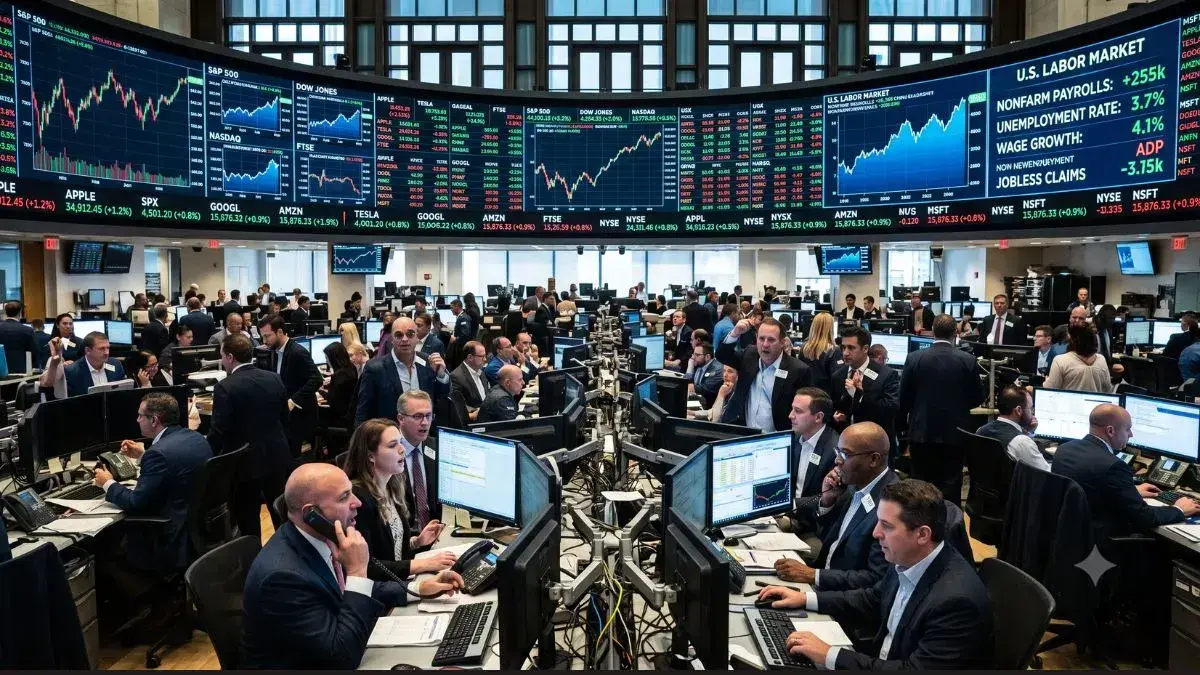
The U.S. economy added 162,000 nonfarm payroll jobs in August while the national unemployment rate held steady at 4.1%, according to data released by the Bureau of Labor Statistics. The hiring expansion surpassed consensus forecasts from economists, who had projected a gain of approximately 65,000 positions following a subdued summer. The government also issued upward…